


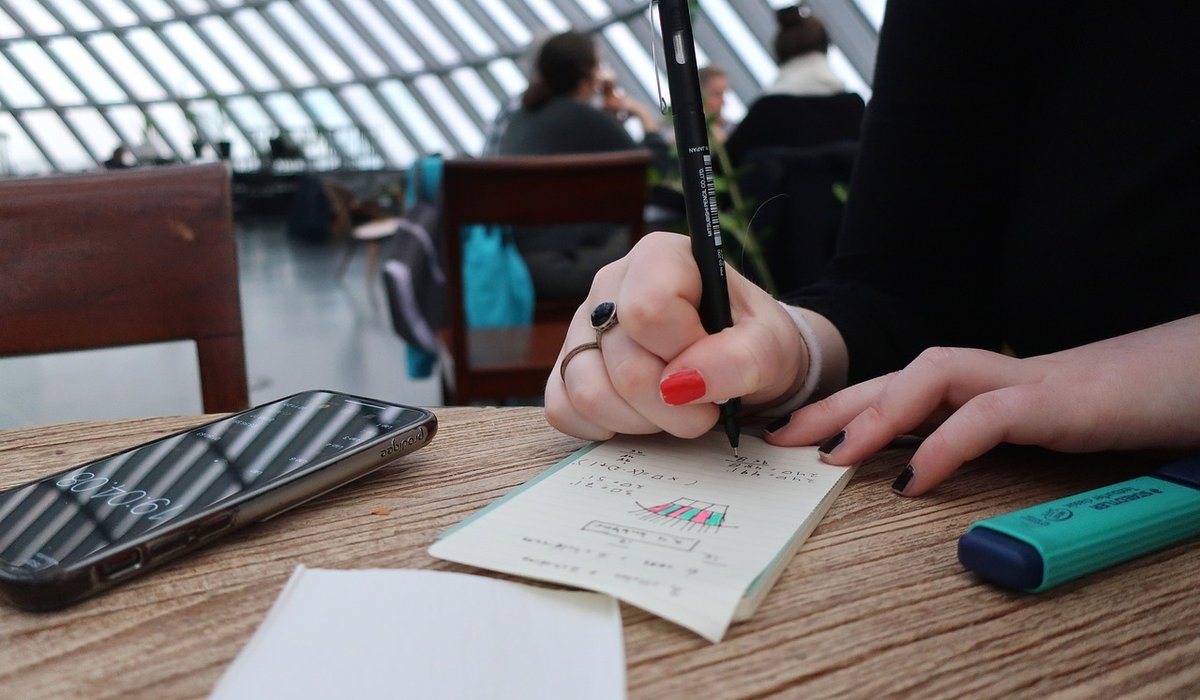
Start with the bits you'd otherwise throw away
Most family memories don't disappear because nobody cared. They disappear because the evidence went in the bin. The cinema ticket, the wristband from the school fete, the receipt from a rainy afternoon in Whitby — individually they look like rubbish. Pasted into a notebook beside three lines of handwriting, they become proof that a Tuesday in February was worth remembering.
The good news is that this is one of the cheapest, quickest hobbies you can take up. You don't need a craft room or a printer that behaves itself. You need a notebook, something to stick things in with, and the habit of keeping hold of the small paper that passes through your hands.
Choose a notebook that can take the knocks
An ordinary hardback notebook will do, but a few details make life easier. Look for paper of around 100gsm or heavier, so ink doesn't bleed through and glued items don't wrinkle the pages underneath. A sewn binding lies flatter than a glued one, which matters when you're sticking in a folded programme.
- Size: A5 is the sweet spot. Big enough for a photograph and a caption, small enough to live in a coat pocket or a glovebox.
- Grid or dot paper: quietly forgiving if your handwriting wanders, and it helps you line up ticket stubs neatly.
- One journal per year, per child, or per theme: whatever keeps you writing. A single "family book" that everyone adds to works beautifully and often becomes the most-read volume in the house.
Stick things in properly, so they last
Here's where a little care pays off decades later. Ordinary sellotape yellows and goes brittle, and cheap glue can stain. Use a pH-neutral adhesive or double-sided tape designed for scrapbooks, or photo corners if you want to be able to lift an item out later. Washi tape is fine for the corners of ephemera you're happy to commit.
A few practical rules:
- Write the date on the page before you glue anything down. You will not remember later.
- Note names in full at least once. "Grandma" means something different in every generation.
- Photocopy or photograph anything irreplaceable — a birth certificate, a winning raffle ticket, a letter from a grandparent — and paste the copy in.
- Avoid laminating. It feels protective; it's actually irreversible.
Make photographs earn their place
Phone photos are wonderful and mostly invisible. Printing even a handful a month changes that. A pocket printer or a high-street print kiosk is all you need; order a batch every few weeks and keep them in a little envelope with the journal.
Trim them. A photograph cropped to the faces, or to the mud on the boots, tells the story faster than the full frame. Then write underneath it, in pencil if you're nervous about commitment, the things the image can't say: who took it, what had just happened, what was said five seconds afterwards. "Ellie, refusing to look at the camera because she'd just lost a tooth" is worth more than a perfect portrait.
Write the small, specific details
This is the heart of it. Future readers won't care that the day was "lovely". They'll care that it rained so hard the chip shop gave you free scraps while you waited, or that the car radio was stuck on one station for the whole drive home.
If you're short on time, use a simple three-line formula:
- Where and who — "Saturday, Nan's kitchen, all six of us."
- One thing that happened — "The power cut mid-bake; we ate the cake warm by candlelight."
- One thing someone said — "Nan: 'Well, that's one way to save on electricity.'"
Quotes age better than descriptions. A child's mispronounced word, written down at the time, will be read aloud at their eighteenth birthday.
Build a rhythm that survives real life
Daily journaling is a lovely idea that most of us abandon by the second week of January. Try a gentler structure instead. Keep the journal somewhere visible — on the kitchen table, not in a drawer — and add to it when something happens rather than at a set hour. Then hold a monthly catch-up: twenty minutes, a cup of tea, the envelope of printed photos and whatever's accumulated in your bag.
Get everyone involved. Children can choose which ticket goes on which page and draw around a shell or a leaf. Older relatives can be handed the book and a pen and asked to add a memory of their own, which is how you end up with three generations on one spread.
Store finished journals upright, out of damp and direct sunlight, and consider photographing each page with your phone as you go. That way the archive survives a burst pipe, a house move, or an overenthusiastic toddler with a felt tip.
None of this needs to be neat. A journal that's a bit lumpy, with glue marks and crossing-out and a biscuit crumb pressed into page forty, is doing its job perfectly. Start with today's receipt and one sentence. That's the whole trick.


Leave a reply